- Route Distance: Approximately 4.2 kilometers loop starting and ending at the Clock Tower (Saat Meydanı).
- Estimated Walking Time: 2 to 3 hours at a leisurely photographic pace.
- Primary Quarters: Nizam (western coastal avenue lined with grandest villas) and Maden (eastern historic residential slopes).
- Key Architectural Styles: Late-Ottoman wooden craftsmanship (*bağdadi* plaster over lath), French Art Nouveau, Neo-Gothic, and Belle Époque.
- Respecting Privacy: All highlighted mansions are either privately owned family residences or protected historical monuments. Admire and photograph exclusively from public streets and garden gates.
The Architectural Heritage of Prinkipo
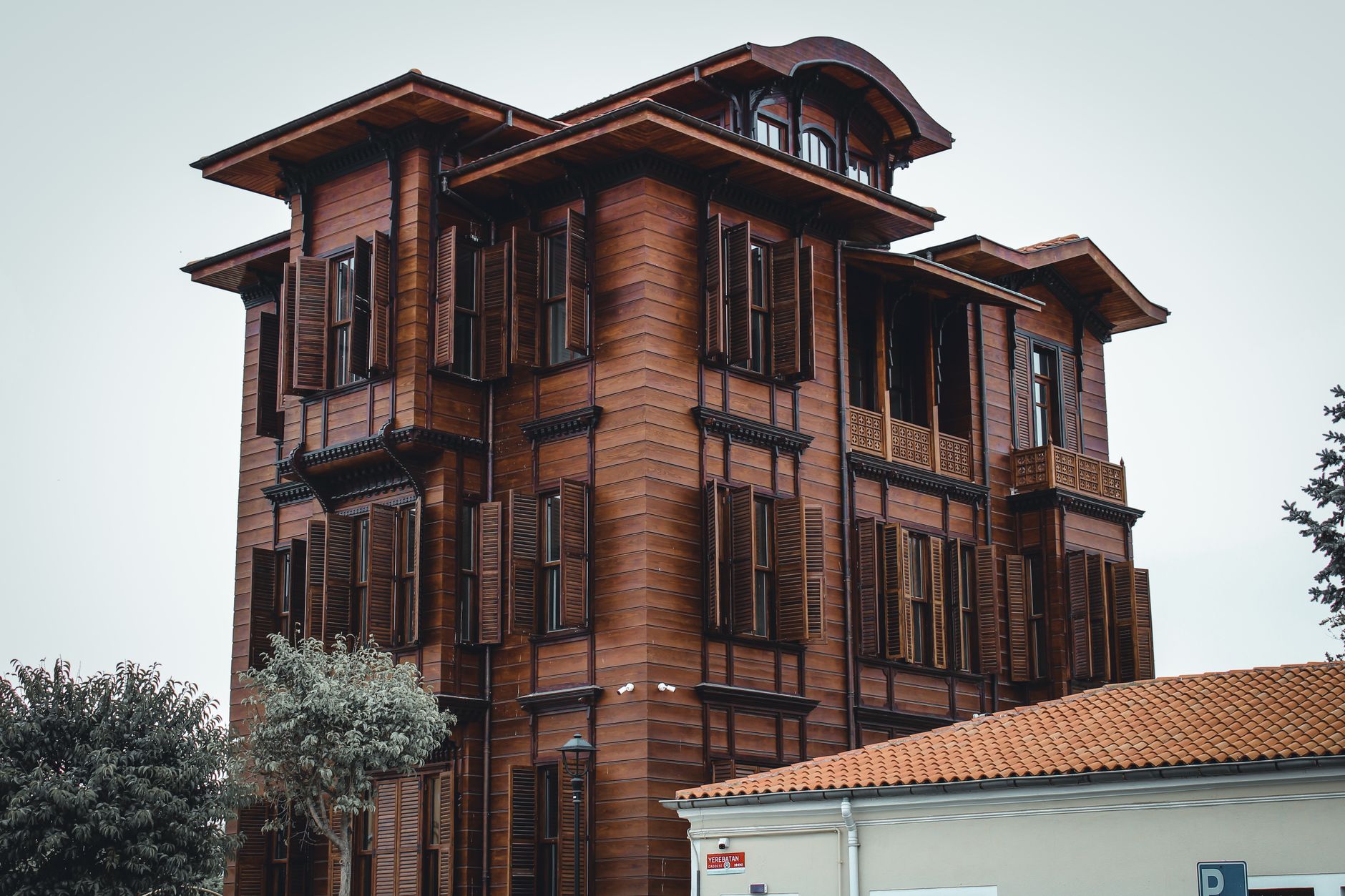
Nowhere in the former Ottoman Empire does such a dense, extraordinarily preserved concentration of wooden residential architecture survive as on Büyükada. In the late nineteenth century, Istanbul’s cosmopolitan elite—consisting of Greek maritime magnates, Armenian master builders, French bankers, Jewish industrialists, and progressive Ottoman ministers—sought refuge from the summer heat and cholera epidemics of Pera and the Golden Horn.
Bypassing the restrictive spatial patterns of traditional timber Istanbul houses (*konak*), island estate owners commissioned European-educated architects to fashion a bold hybrid architectural language. They combined Swiss-chalet roof pitches designed to shed pine needles, wrap-around verandas inspired by colonial Indian bungalows, hand-carved wooden lace (*ajur*) eaves, and intricate stained-glass transom windows. Because the island has never permitted internal combustion automobiles, the delicate pine timber framing has been spared the soot, vibration, and sulfur exhaust that degraded mainland Istanbul's historic neighborhoods.
Curated 5-Stop Walking Itinerary
Splendid Palace Hotel & Reşat Nuri Güntekin House
Departing the historic Ottoman passenger terminal, walk past the Clock Tower and follow 23 Nisan Caddesi southwest. Within 300 meters, pause before the towering white facade and crimson shutters of the Splendid Palace Hotel (1908). Note the twin silver cupolas and timber balconies that reflect Byzantine column proportions.
Two hundred meters further along the tranquil coastal avenue stands the home of celebrated Turkish novelist Reşat Nuri Güntekin (author of Çalıkuşu), an elegant three-story white timber mansion where Güntekin penned several of his classic twentieth-century literary works.
Mizzi Mansion (Al Palas) & Astronomical Tower
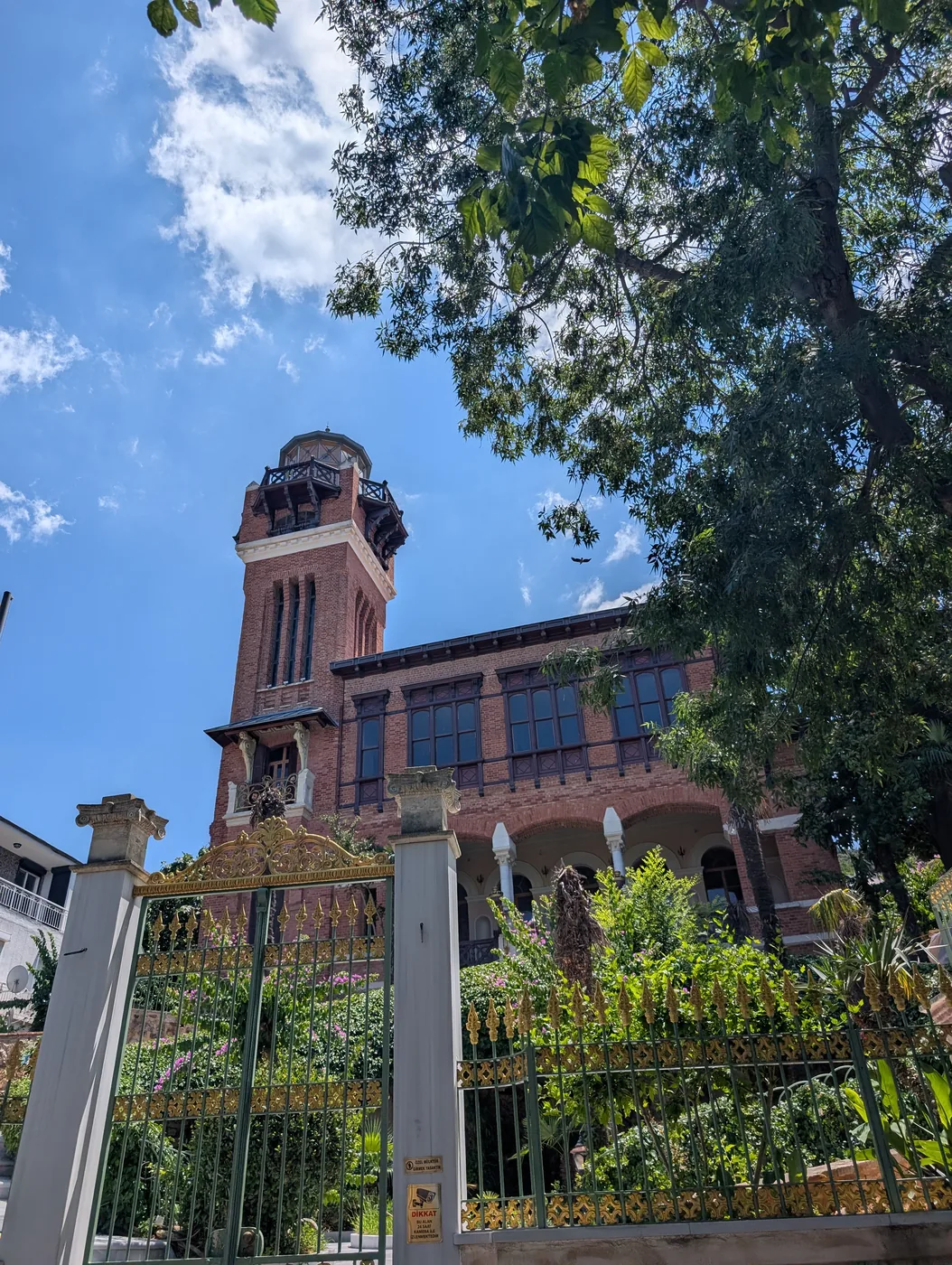
Turn inland up Çankaya Caddesi, the ridge street connecting the harbor with Nizam. At No. 31 stands Mizzi Köşkü, popularly known as Al Palas (The Crimson Palace). Built in 1894 for British barrister George Mizzi, this estate breaks from timber tradition with rust-colored stone masonry and a dramatic four-story gothic crenellated observation tower.
Mizzi was an amateur astronomer who installed a high-powered telescope atop the tower to study planetary movements above the light-pollution-free night skies of the Sea of Marmara.
Con Paşa Köşkü & Wooden Fretwork Masterpieces
Proceeding onto Nizam Caddesi, you enter Büyükada’s most prestigious residential boulevard. At No. 27 stands Con Paşa Köşkü, built in 1880 by Venetian master architect Achille Manoussos for Trasivulos Yanaros (Con Paşa), who operated early passenger ferry services across the Marmara.
The villa is celebrated for its ornate wooden fretwork, multi-tiered pediment balconies, and cast-iron dragon gargoyles along the eaves. Directly across the street, the gardens of Fabiato Köşkü showcase neoclassical stone gates and manicured Mediterranean boxwood hedges.
Leon Trotsky’s Yanaros Exile Estate
Turning down Hamlacı Sokak toward the sea, view the ruined stone entrance portals of Yanaros Köşkü (Troçki Evi). Soviet revolutionary Leon Trotsky lived in this secluded red-brick compound from 1929 to 1933 following his expulsion by Joseph Stalin.
While the villa suffered fire and neglect over recent decades, its overgrown gardens, coastal stone seawall, and private boat jetty evoke an atmosphere of profound historical exile.
Prinkipo Greek Orphanage Pine Trail
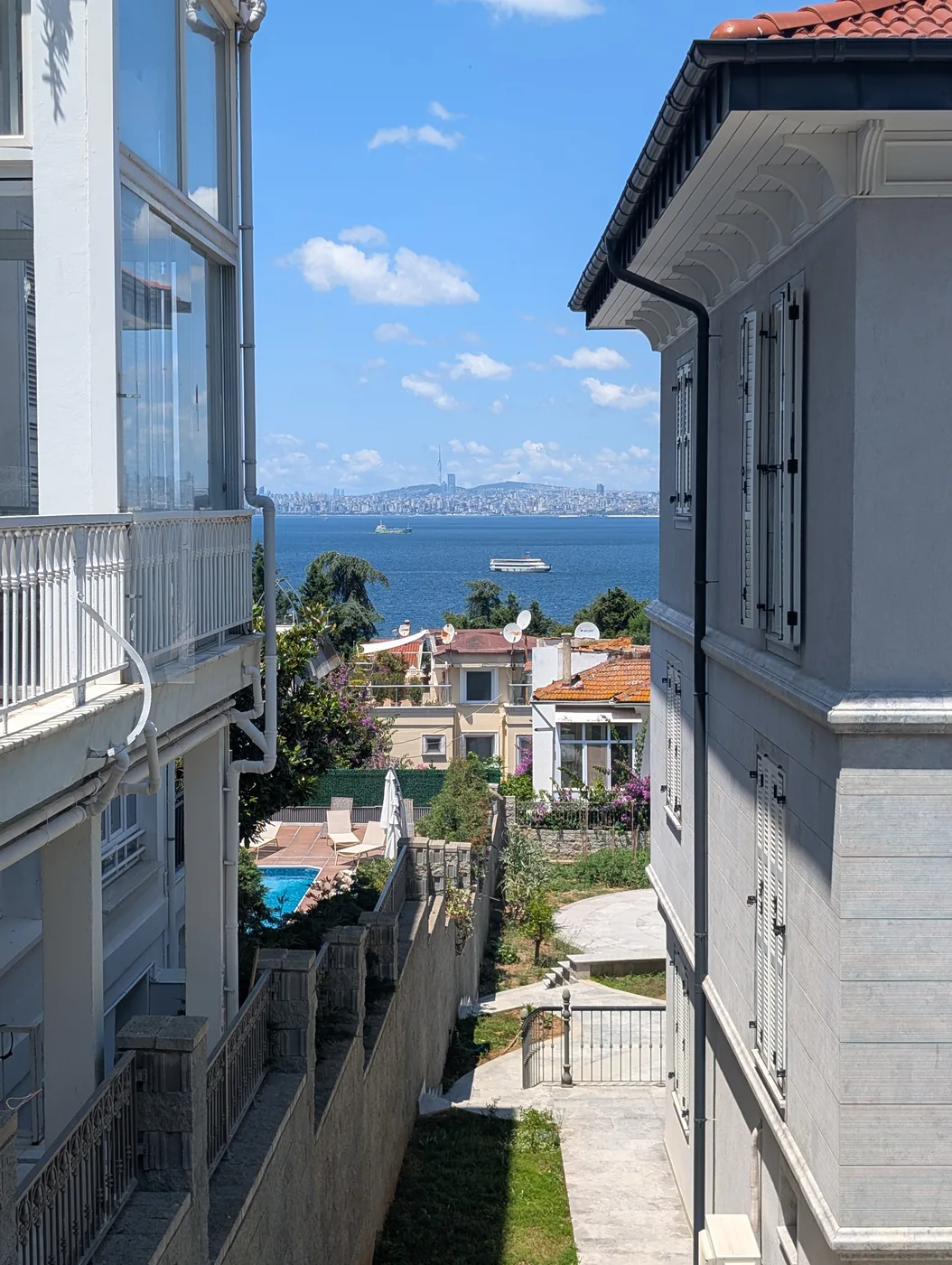
Loop northeast through pine-shaded trails ascending toward the crest of Hristo Hill. Here, Europe’s largest wooden monument—the monumental 1898 Prinkipo Greek Orthodox Orphanage—rises above the treetops like a phantom ocean liner docked in the forest. Rest at the forest viewpoint before following the descending trail back to the Clock Tower market.
Architectural Photography & Etiquette
Capturing Büyükada’s historic architecture requires mindfulness and optimal lighting conditions:
Traditional Timber Joinery & Bağdadi Craftsmanship: The construction technique utilized across these estates is known as *bağdadi*. Master carpenters assembled dense pine and oak structural timbers joined with mortise-and-tenon joints without relying on rigid metal fasteners, allowing the wooden skeleton to flex naturally during seismic tremors. Thin horizontal wooden slats were nailed across the frame, then coated with an insulating lime, horsehair, and fine sand plaster. This traditional method provided remarkable thermal insulation against humid Marmara summer breezes and blustery winter storms.
- Golden Hour Light: Morning light (08:30–10:30 AM) illuminates the eastern Maden mansions beautifully, while late afternoon (16:30–18:30 PM) casts warm amber light across the western balconies along Nizam Caddesi.
- Residential Respect: The vast majority of these homes are active private residences inhabited by families whose island roots extend back generations. Never open private garden gates, lean into windows, or fly drones over residential properties.
- Preservation Challenges: Timber buildings face constant threats from coastal moisture, carpenter bees, and catastrophic fire risks. Support local heritage initiatives and never discard cigarette butts anywhere on island streets.
Join an Organized Architectural Excursion
Prefer a licensed maritime historian to guide your walk through Nizam and explain the hidden stories behind these nineteenth-century estates?