The 2026 independent reference to Istanbul's largest car-free island. 4 bookable tours and ferry lines analysed, ranked by traveller consensus, with dual pricing (€/$/₺), dock departure addresses, and critical red flags.
Critical 2026 reality check: Horse-drawn carriages (phaetons) were permanently banned in 2020. All island transit is now zero-emission electric buses (Adabüs) and rental bikes. On weekends, ferries from Kabataş and Eminönü get packed after 10:30 AM — arrive early or book priority tickets.
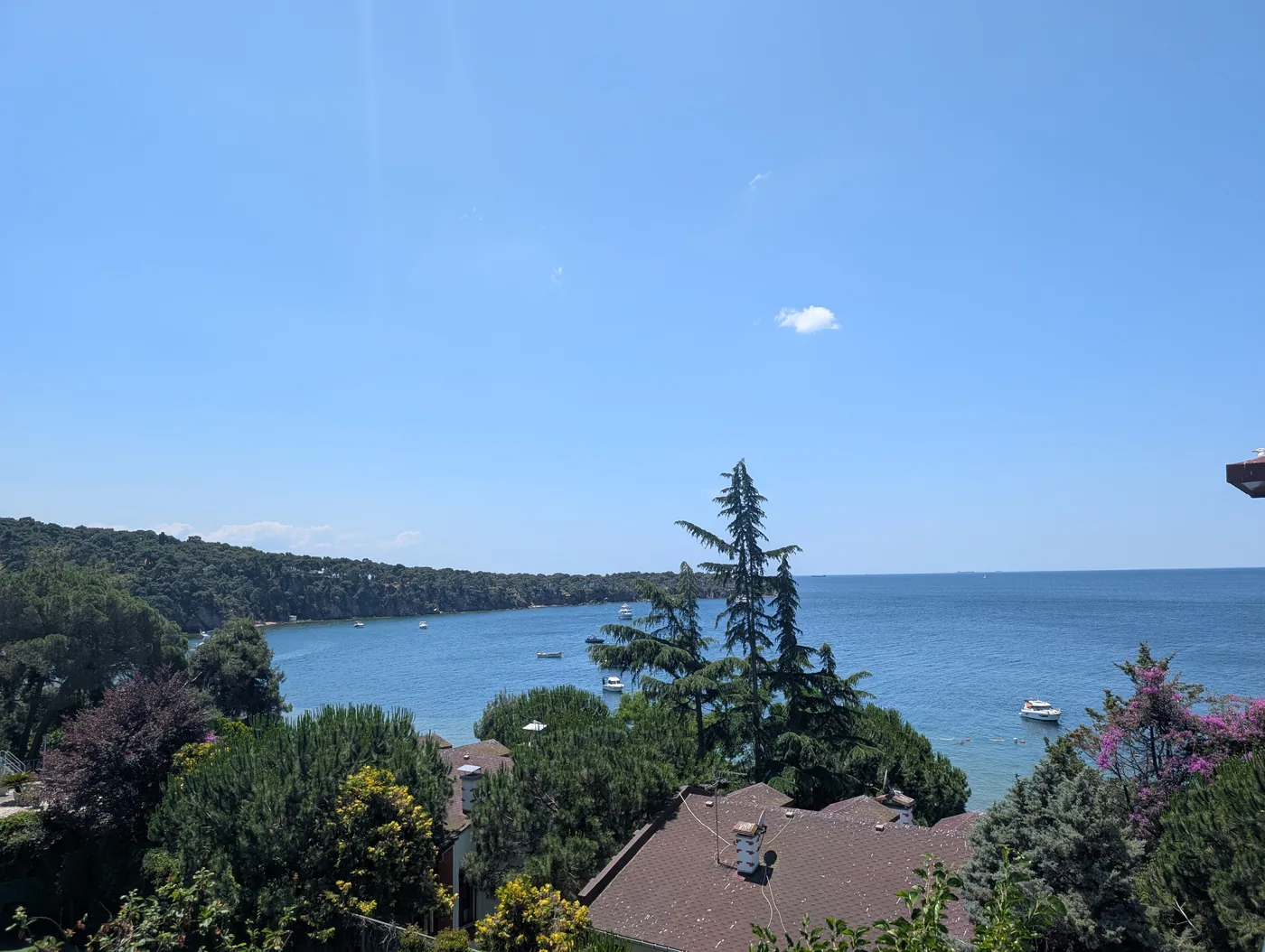
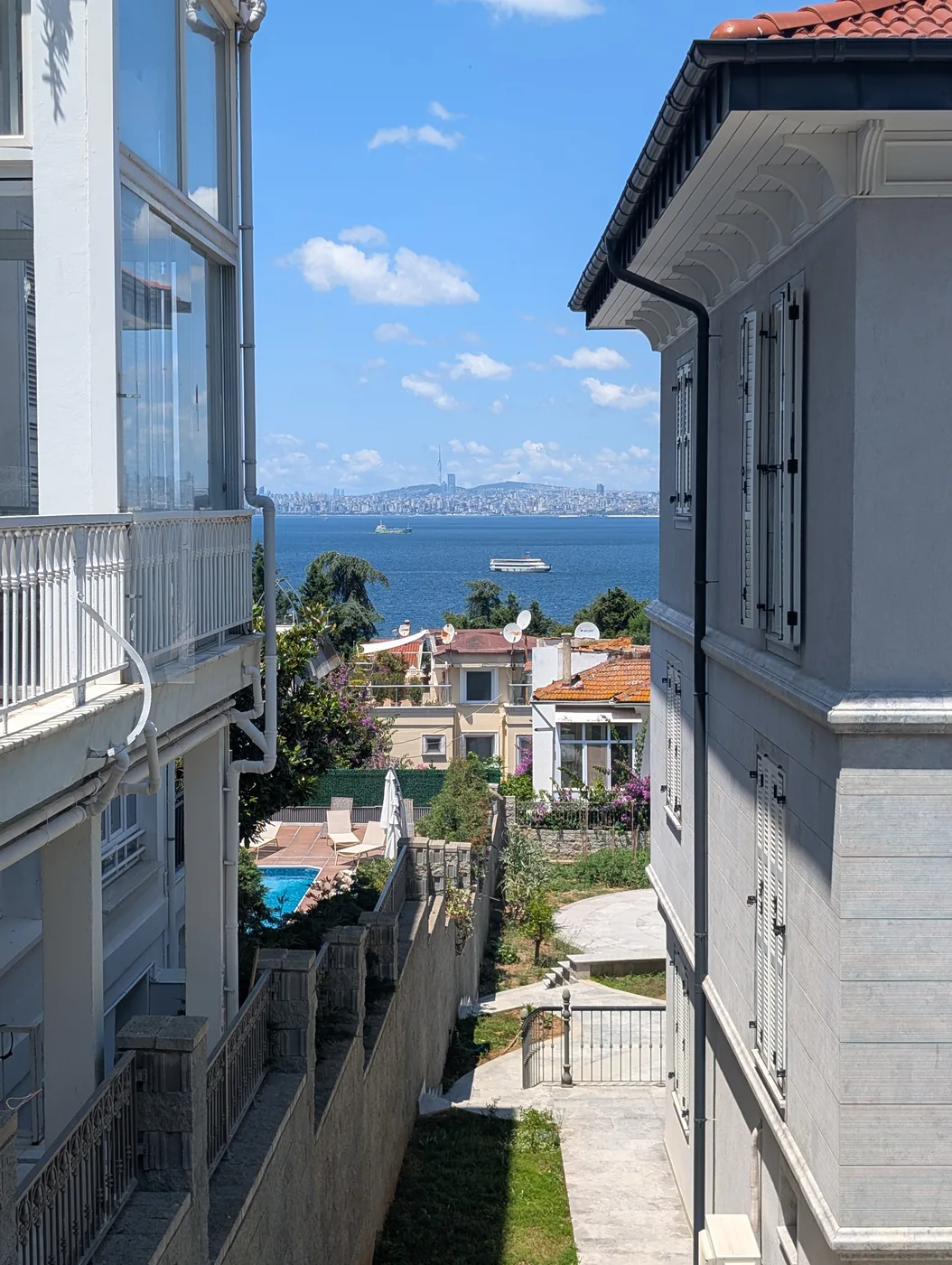
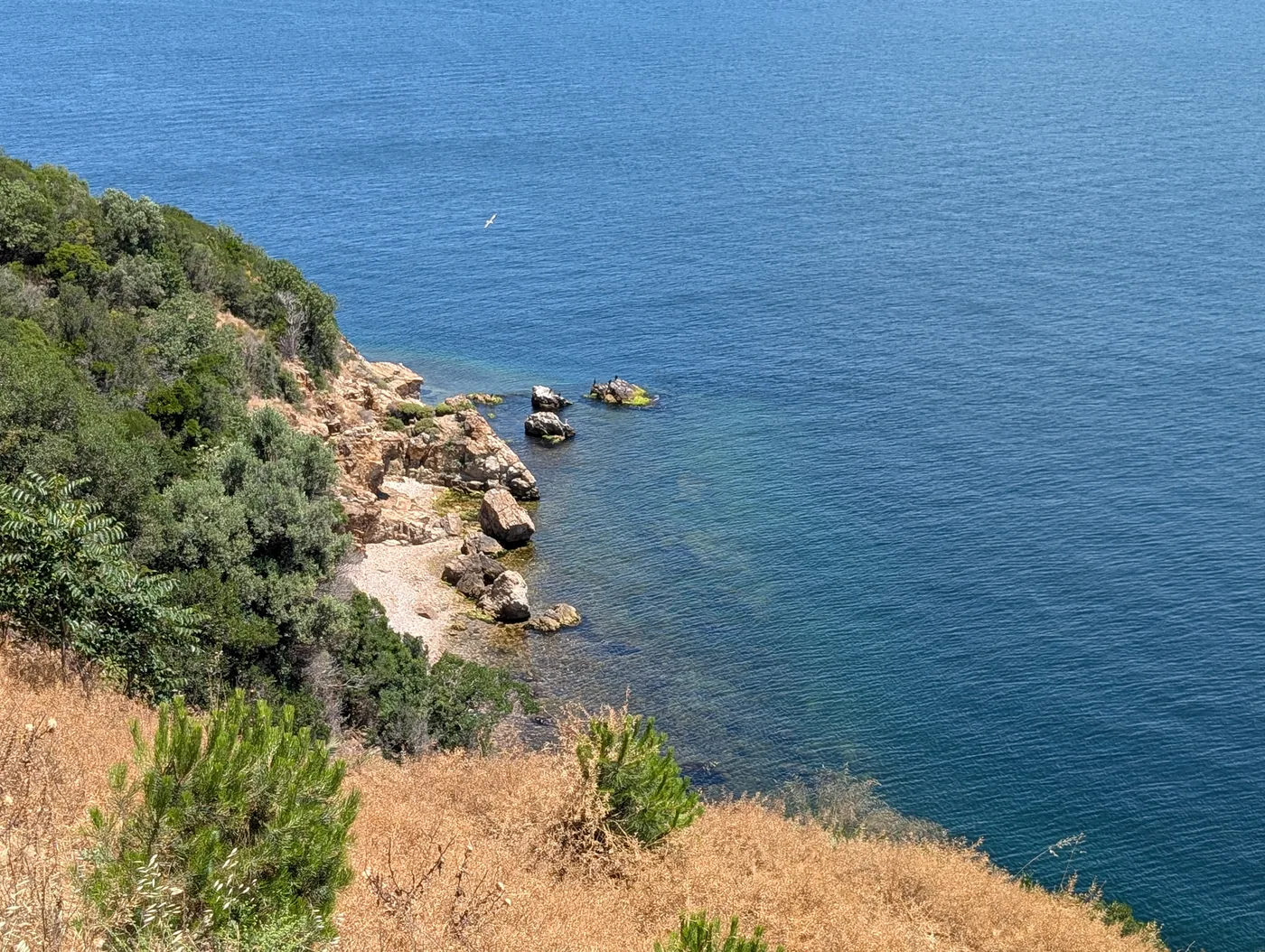
Panoramic view of the Sea of Marmara from the quiet pine-covered hills of Büyükada. Photo: Editorial Archive (June 2026)
02 · The Ranked Shortlist
Top 4 Büyükada Tours & Experiences
Ranked by verified traveller feedback across GetYourGuide, Viator, and Google Reviews — weighted by logistic reliability, content depth, and fair pricing without hidden extras.
01
Büyükada Round-Trip Ferry Ticket with Audio Guide
The gold standard for independent travelers. Direct round-trip ferry crossing from Kabataş terminal with mobile audio guide app detailing Bosphorus landmarks and island mansions. Open return departures allow you to explore at your own pace until sunset.
Büyükada Tour with 3-Course Lunch & Electric Shuttle
The highest-rated organized excursion in the pool. Combines a scenic Marmara cruise with a licensed guide, a 3-course grilled fish or chicken lunch at a seaside restaurant, and electric Adabüs shuttle tickets to eliminate steep uphill walking.
7-8 hours€22.51 (~$24.50)Central Istanbul Pier4.9★ (626 reviews)Lunch & transit includedBook Tour (€22.51) →
03
Princes' Islands Twin Discovery: Kınalıada & Büyükada with Lunch
Experience two contrasting islands in a single 8-hour voyage. Discover the peaceful red cliffs of Kınalıada, swim in a secluded Marmara cove (summer), and explore Büyükada's late-Ottoman mansion district with a buffet lunch served on board.
Büyükada Full-Day Experience with Hotel Pick-up & Lunch
Maximum convenience for families and first-time Istanbul visitors. Air-conditioned hotel transfer from Sultanahmet, Taksim, and Şişli straight to the boat, accompanied by a professional guide throughout the island visit.
Büyükada lies roughly 20 kilometers southeast of Istanbul's historic peninsula in the Sea of Marmara. Because no bridges or tunnels exist, passenger ferries are the sole transit mode.
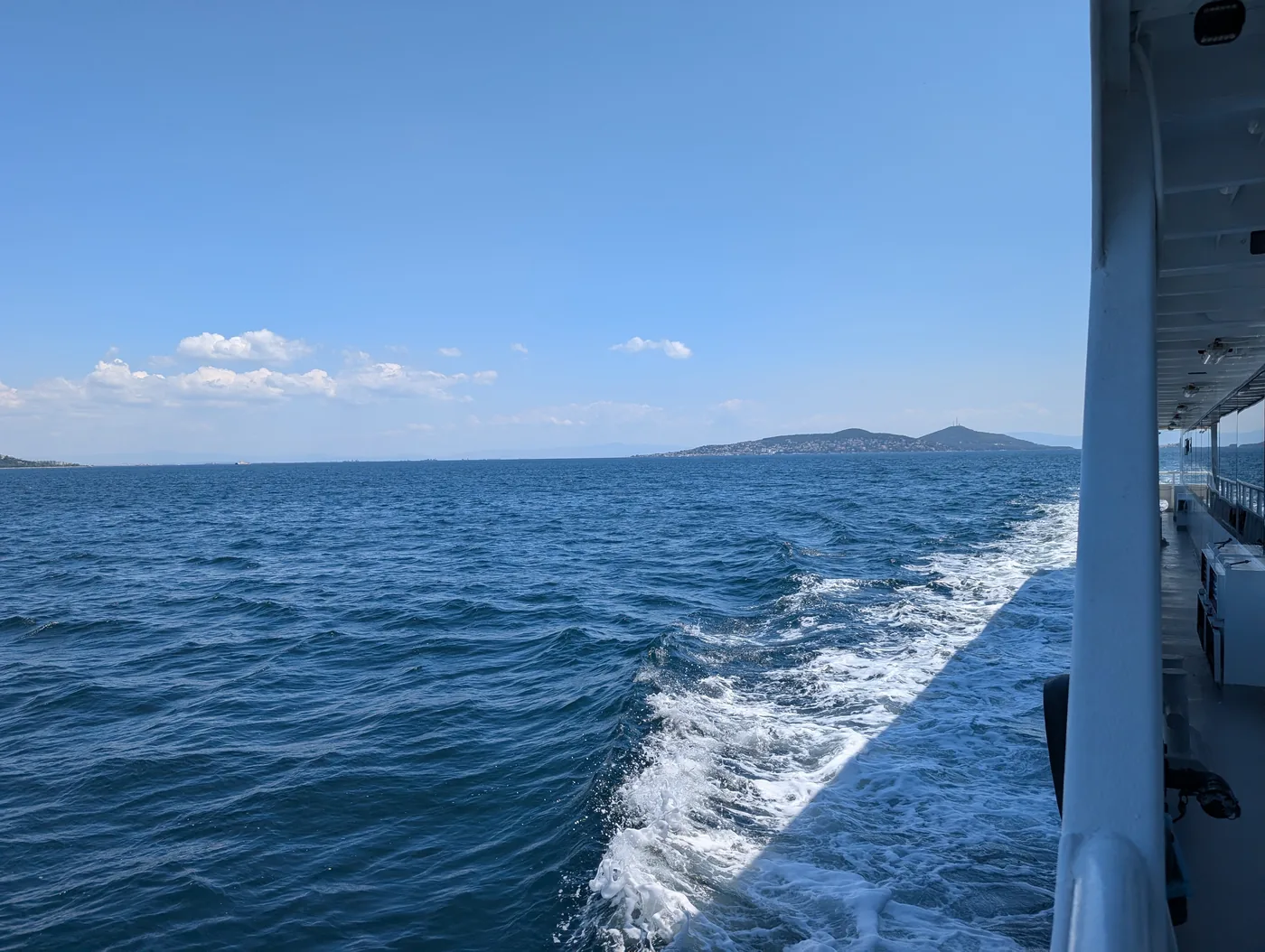
Traditional Marmara passenger ferry approaching Büyükada's historic Ottoman pier.Büyükada's pine-clad hills and timber shoreline approached across morning waves. Photo: Editorial Archive (June 2026)
Primary Departure Terminals in Istanbul
Kabataş Pier (European Side): The premier terminal for travelers staying in Taksim or Sultanahmet. Connects directly to the F1 Füniküler and T1 Tram line. Sailing time: 50–55 minutes.
Eminönü Pier (European Side): Located right beside Galata Bridge. Historic Sirkeci tram access. Sailing time: 65–75 minutes (stops at Kadıköy and Kınalıada first).
Kadıköy & Bostancı (Asian Side): Bostancı provides the fastest crossing in Istanbul — just 30–35 minutes on passenger catamarans. Kadıköy sailings take approximately 45 minutes.
Ferry Pricing in 2026: Standard public ferries (Şehir Hatları) cost roughly ₺140–155 per crossing using an Istanbulkart. Private pre-booked ferry tickets with priority boarding and audio guides cost €14.50 (~$15.80), saving you up to 45 minutes of ticket booth queuing during peak summer sailing windows.
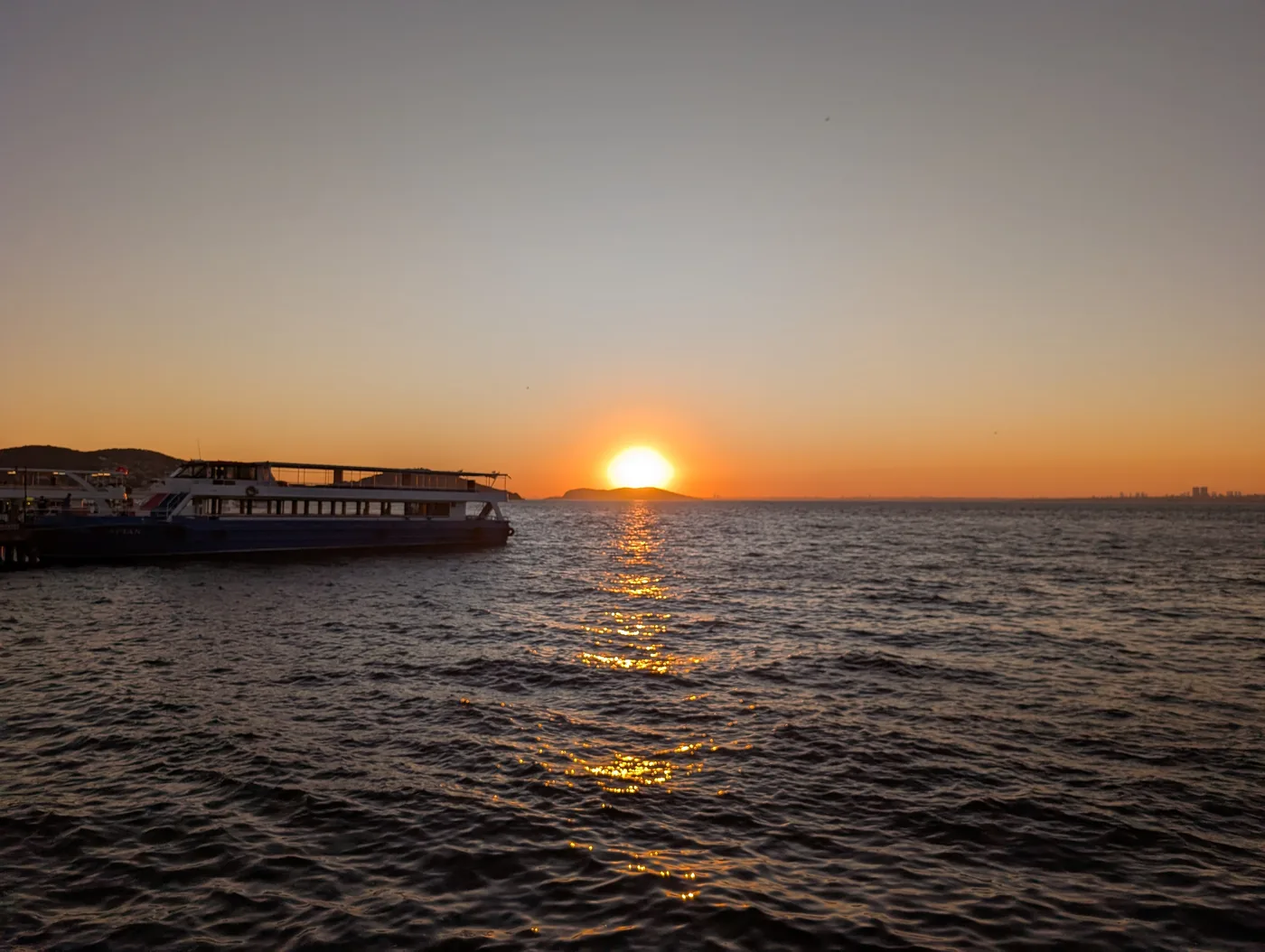
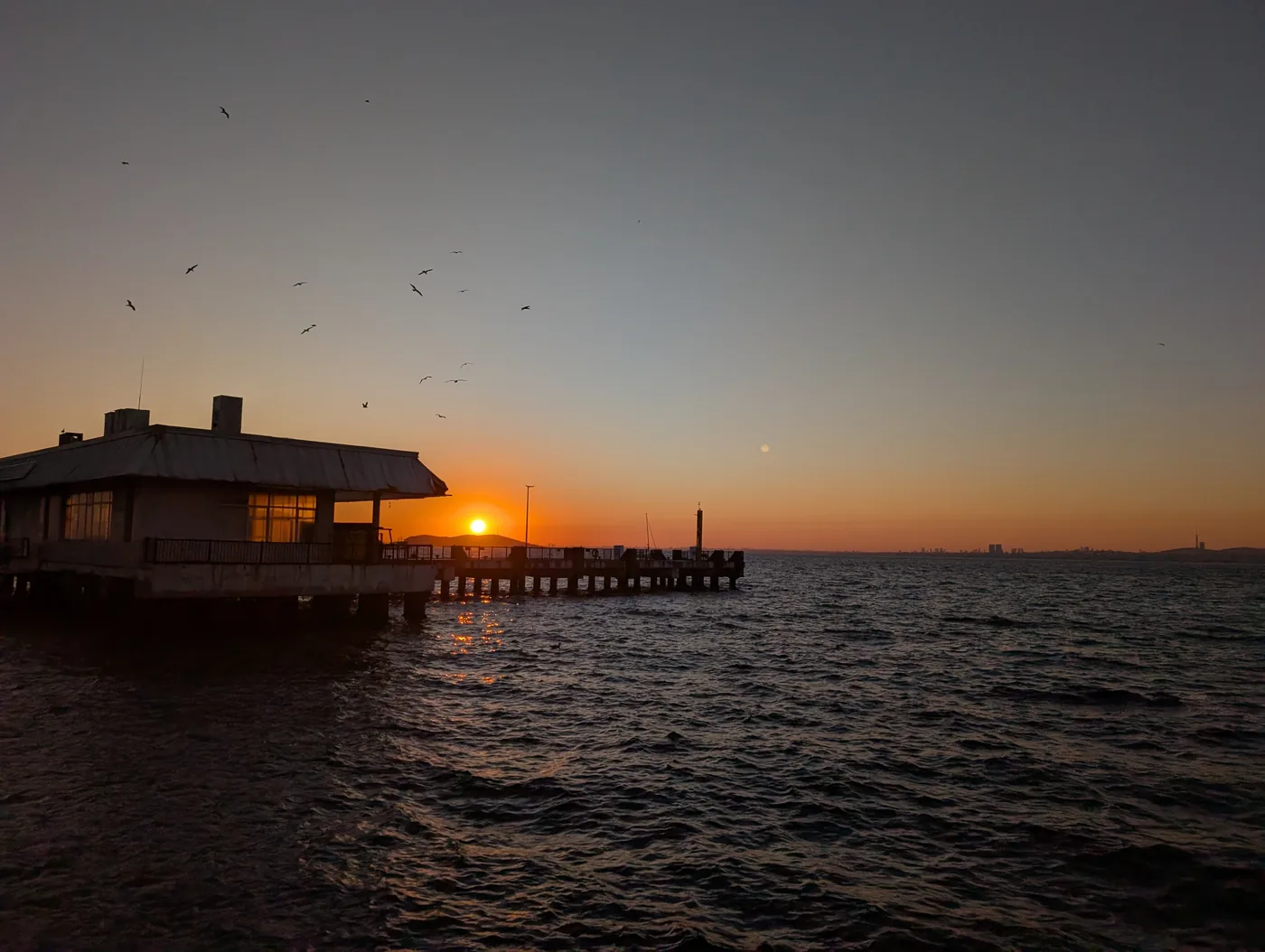
Golden hour sunset over Büyükada's historic Ottoman passenger terminal and departing ferry. Photo: Editorial Archive (June 2026)
05 · Architectural Heritage
Grand Ottoman Timber Mansions & Prinkipo History
Büyükada (known historically in Greek as Prinkipo, the "Island of the Prince") flourished during the late 19th and early 20th centuries as Istanbul's cosmopolitan summer retreat for Greek, Armenian, Jewish, and Ottoman noble families.
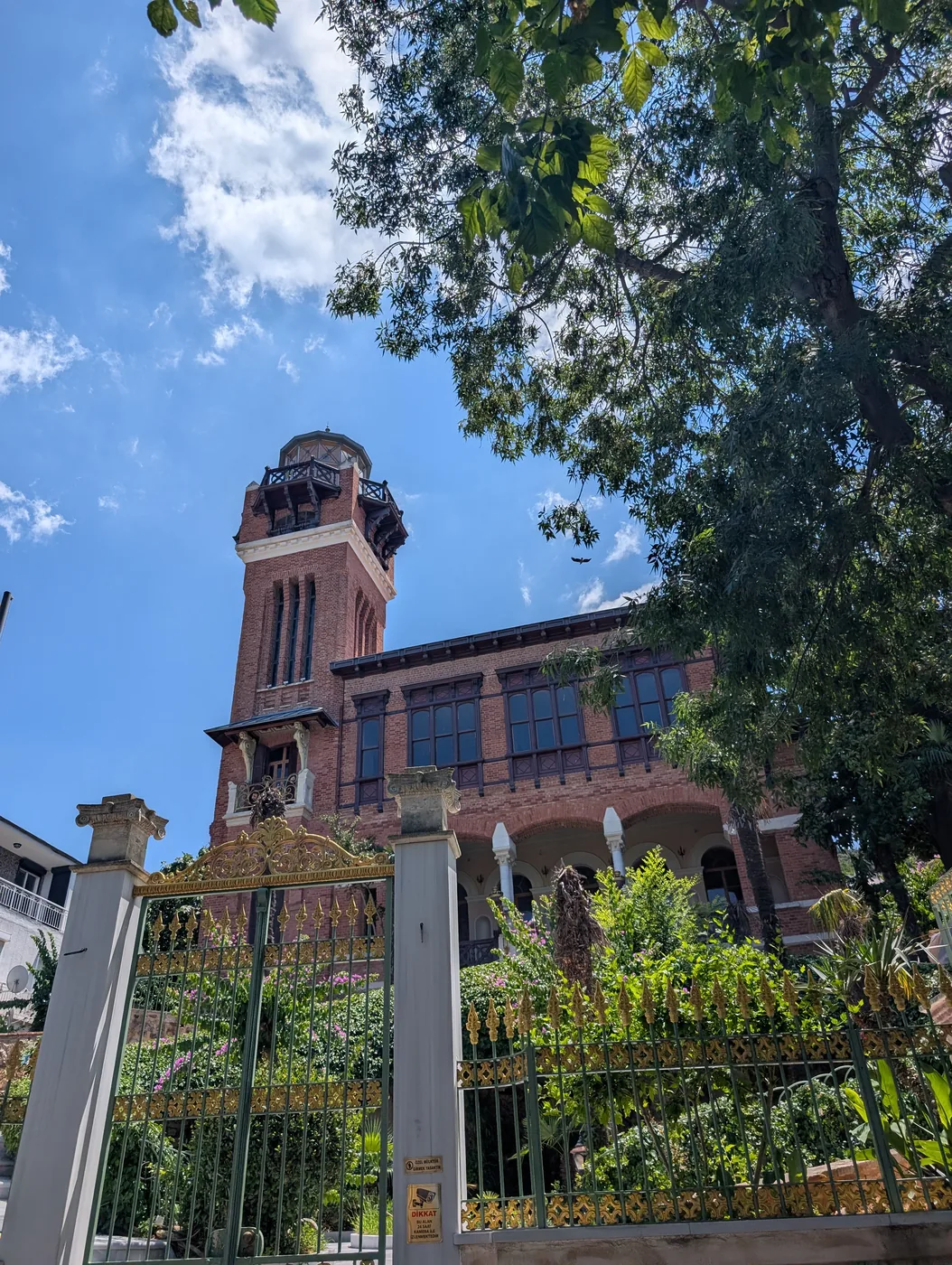
The iconic Splendid Palace Hotel (built 1908), blending Art Nouveau curves with Ottoman red shutters.Historic late-nineteenth-century Ottoman timber villa with ornamental balconies along Çankaya Caddesi. Photo: Editorial Archive (June 2026)
Key Architectural Landmarks on Büyükada
Splendid Palace Hotel (1908): A majestic wooden palace designed by architect Kaludi Laskaris, featuring glowing red shutters, two courtyard cupolas, and tranquil century-old salons.
Leon Trotsky's Exile Residence (Yanaros Mansion): Perched on Hamlacı Street, this crumbling seaside villa is where Soviet revolutionary Leon Trotsky lived in exile from 1929 to 1933, drafting History of the Russian Revolution.
Prinkipo Greek Orphanage (1898): Europe's largest wooden construction (and the second largest in the world). Designed by French-Ottoman architect Alexandre Vallaury originally as a luxury casino hotel, then transferred to the Ecumenical Patriarchate.
Mizzi Mansion: A red-brick, crenelated turret villa constructed for British lawyer George Mizzi, complete with an observatory tower overlooking the Marmara.
Idyllic Sea of Marmara vista framed between historic wooden mansions on Büyükada. Photo: Editorial Archive (June 2026)
06 · Summit Pilgrimage
Aya Yorgi Monastery: The Summit of Büyükada
Rising 202 meters above sea level on Yücetepe hill, the Greek Orthodox Monastery of St. George (Aya Yorgi) dates back to 1751 and offers the single most breathtaking panoramic vista in Istanbul.
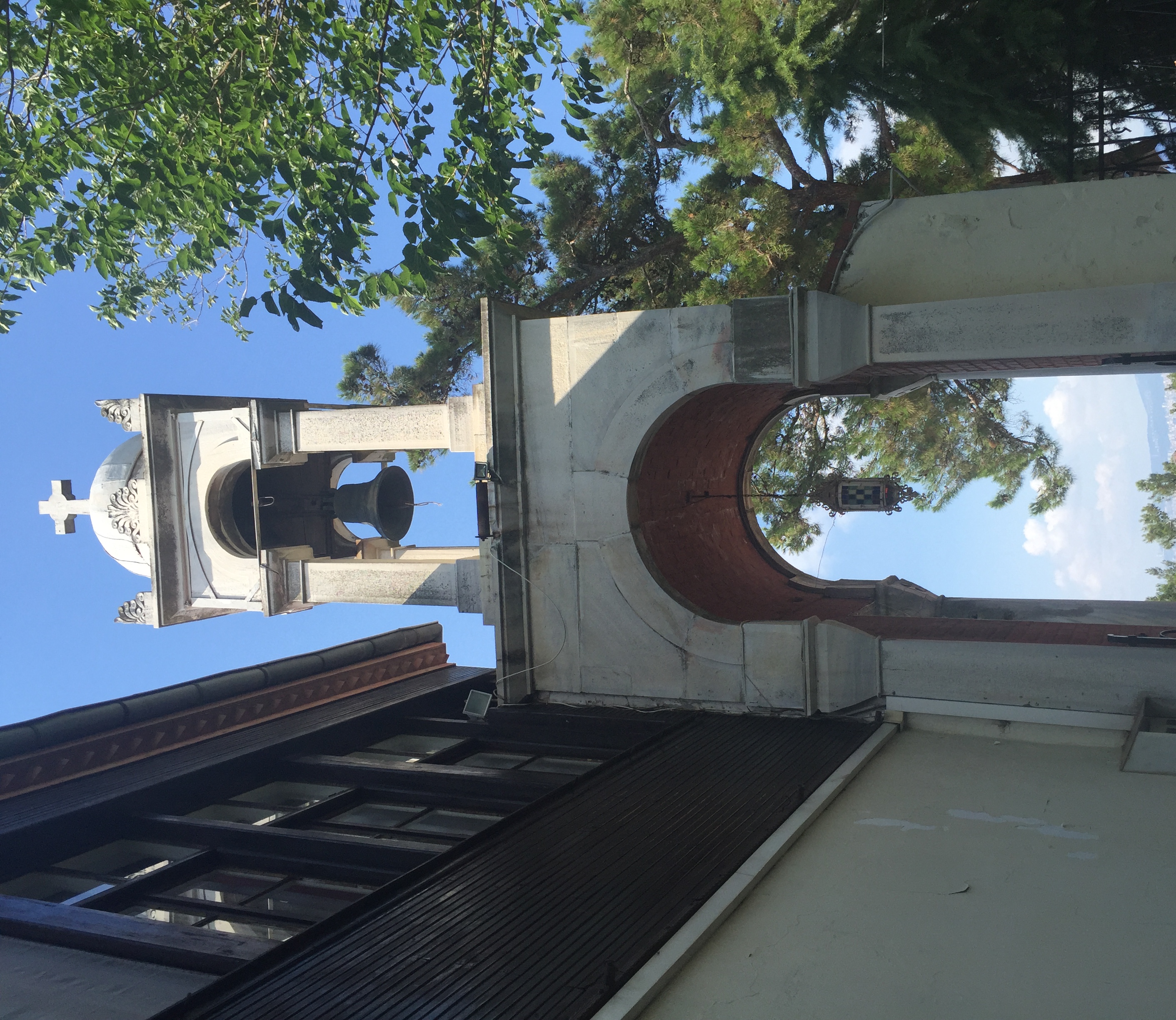
Aya Yorgi Church at the 202m summit, offering 360-degree views of Istanbul and the Princes' Islands.
Pilgrims from around the world visit on April 23 and September 24 to unroll spools of thread from the base of the hill to the chapel without speaking, believing their wishes will come true. At the summit, Yücetepe Kır Gazinosu serves local grilled meatballs, oven-baked bread, and Turkish tea beneath pine canopies with endless sea views.
Dramatic rocky cliff overlook at Kurşunburnu Cape on the wild southern coast of Büyükada. Photo: Editorial Archive (June 2026)
07 · E-E-A-T Editorial Critique
Red Flags & What to Avoid on Büyükada
Proving editorial independence through unbiased criticism. These 5 common tourist traps, safety hazards, and timing mistakes ruin island visits when unplanned.
⚠️
Horse Carriages (Phaetons) Have Been Banned Since 2020
Beware of rogue street touts or outdated guidebooks advertising romantic horse carriage rides. Following an animal welfare crisis, horse phaetons were legally abolished in 2020. All transit is now handled by official electric Adabüs shuttles. Anyone claiming to offer horse rides is operating illegally.
⚠️
Weekend Terminal Gridlock at Kabataş and Eminönü
On sunny summer Saturdays and Sundays, crowds surge between 10:00 AM and 12:30 PM. Waiting times at public ticket counters can exceed 45 minutes, and popular sailings reach full passenger capacity. Arrive before 09:30 AM or book pre-paid mobile ferry vouchers.
⚠️
Unpriced Seafood Restaurants Along the Pier
Waterfront restaurants directly facing the ferry dock are notorious for aggressive touting and missing prices on seafood displays. Unwary tourists frequently face surprise bills for "fish per 100 grams". Always insist on a printed menu or dine at trusted cafes in the upper mansion district.
⚠️
Aya Yorgi Cobblestone Descent Slipping Hazard
The 1.2-kilometer uphill path from Lunapark square climbs at a steep 20-degree incline over limestone cobblestones polished smooth by millions of footsteps. Walking this in flip-flops, smooth leather soles, or heels frequently results in twisted ankles. Wear sturdy rubber-soled sneakers.
⚠️
The 17:30–19:30 Evening Return Ferry Stampede
The vast majority of day-trippers head back to Istanbul simultaneously around sunset. Lines at the pier wrap around the clock tower square, and boats become standing-room-only. Schedule your return for 16:30 or stay for a peaceful late dinner and catch the 20:30 evening sailing.
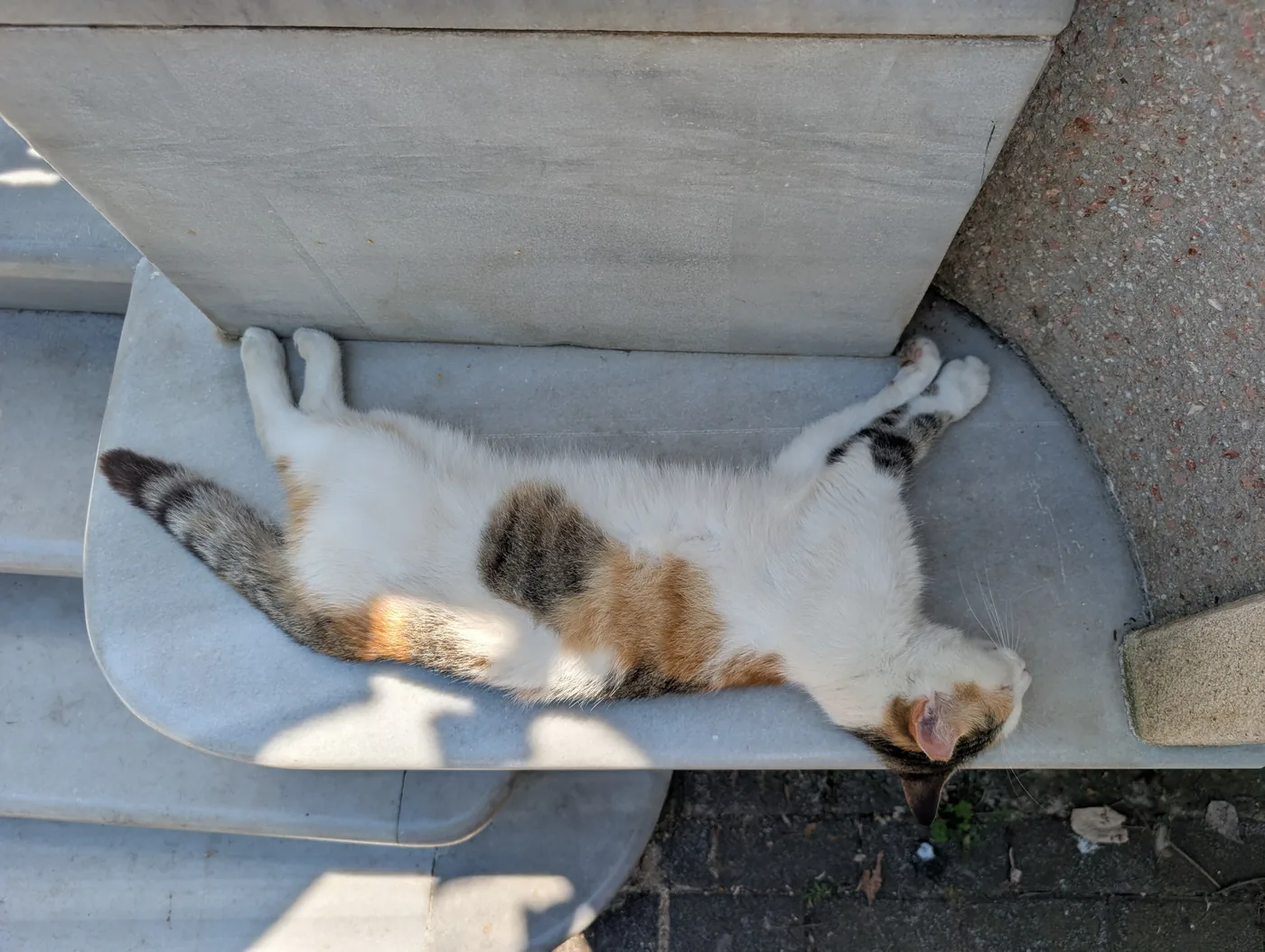
Resident street cat resting under coastal pine trees along a quiet car-free residential avenue. Photo: Editorial Archive (June 2026)
08 · Traveller Dilemmas
Frequently Asked Questions
Straightforward answers to the most searched traveller dilemmas, with real prices, dock directions, and objective trade-offs.
Round-trip ferry ticket (€14.50 / ~$15.80) for independent explorers who want complete schedule freedom and casual wandering; guided day tour (€22.51 / ~$24.50) for first-timers seeking effortless logistics with lunch, electric shuttle rides, and historical mansion narrative included. The standalone ferry gives you freedom to stay for sunset dinner, but leaves you to navigate electric Adabüs tickets and hill climbs on your own. The guided tour eliminates pier queues and includes a 3-course grilled fish lunch at waterfront restaurants where walk-in diners often face inflated menus.
Four main piers operate across Istanbul — choosing the wrong dock is the most common tourist mistake. European side departures run from Kabataş (best for Taksim via F1 funicular or Sultanahmet via T1 tram) and Eminönü (next to Galata Bridge). Asian side departures leave from Kadıköy and Bostancı (Bostancı is the fastest crossing, taking just 30–35 minutes). Check your departure terminal carefully: municipal Şehir Hatları ferries use public piers with Istanbulkart, while private operators (Turyol, Dentur) and pre-booked GetYourGuide vouchers depart from dedicated adjacent berths.
Yes, Büyükada is open year-round, but low season (November–March) requires preparation. Ferries run on a reduced winter schedule (departures roughly every 90 to 120 minutes rather than hourly), and sailings can be canceled during heavy Marmara Sea fog (lodos storms). While swimming spots and some garden cafes close, historic mansions, the Splendid Palace exterior, and Aya Yorgi Monastery remain peaceful and completely crowd-free. Heated indoor cabins on larger municipal ferries make the crossing comfortable.
Yes — the panoramic view from the 202-meter summit across the Marmara Sea and Istanbul skyline is the single best viewpoint on the Princes' Islands. However, be prepared for a steep 1.2-kilometer climb on centuries-old stone cobblestones with an average 20-degree incline from Lunapark square. Motorized vehicles and electric scooters are strictly prohibited on the final hill. Wear rubber-soled sneakers with good traction — polished marble cobblestones become extremely slippery, especially on the descent.
Büyükada for grand late-Ottoman architecture, vibrant dining, and monumental sights like Aya Yorgi and the Greek Orphanage; Heybeliada for a quieter, greener, more relaxed atmosphere with pine groves, the historic Naval Academy, and Halki Seminary. Büyükada is the largest (5.4 km²) and has the most infrastructure, but gets significantly more crowded on summer weekends. If you want both, consider the Princes' Islands Twin Discovery tour (€35.54) which visits Kınalıada and Büyükada in a single day.
All motor cars are legally banned on Büyükada. Mobility is handled via municipal electric minibuses ('Adabüs'), electric taxis ('AdaTaksim'), rented bicycles, or walking. Horse-drawn carriages (phaetons) were completely abolished in 2020. Adabüs shuttles connect the ferry pier to Lunapark square (the base of Aya Yorgi hill) and cost roughly ₺144 per boarding using a standard Istanbulkart (discounted ₺39–46 rates apply strictly to resident Adakart holders). Bicycle rentals cost ₺150–250 per hour along the clock tower square, but check the brakes carefully before leaving.
A budget independent day trip costs approximately €20–30 (~$22–33 / ₺750–1,100) per person including round-trip ferry tickets (€14.50), electric shuttle bus (~₺290 round-trip), and a simple lunch or cafe break. A fully guided experience with lunch and guided mansion walks costs €22.51–35.54 (~$24–39). Waterfront seafood meals at tourist restaurants run €25–45 per person — always check prices per kilogram for fresh fish before ordering.
The top 5 traps to avoid: 1) Rogue operators claiming horse carriage rides exist (completely illegal since 2020); 2) Waterfront fish restaurants along the pier that do not display printed menus or prices; 3) Attempting the steep Aya Yorgi hill hike in flip-flops or smooth-soled shoes; 4) Arriving at Kabataş ferry terminal after 10:30 AM on sunny summer weekends without pre-booked tickets; 5) Waiting until the final 18:30–19:30 evening ferries to return to Istanbul, resulting in massive queues.
Marmara seagulls soaring above the historic passenger ferry terminal at dusk. Photo: Editorial Archive (June 2026)